Donkey Kong
ドンキーコング
- Year
- 1981
- Developer
- Nintendo
- Publisher
- Nintendo
- Platform
- Arcade
- Hardware
- Nintendo arcade hardware
- Genre
- Platformer
- Players
- 1-2 players (alternating)
- Controls
- 4-way joystick + jump button
- Series
- Donkey Kong series
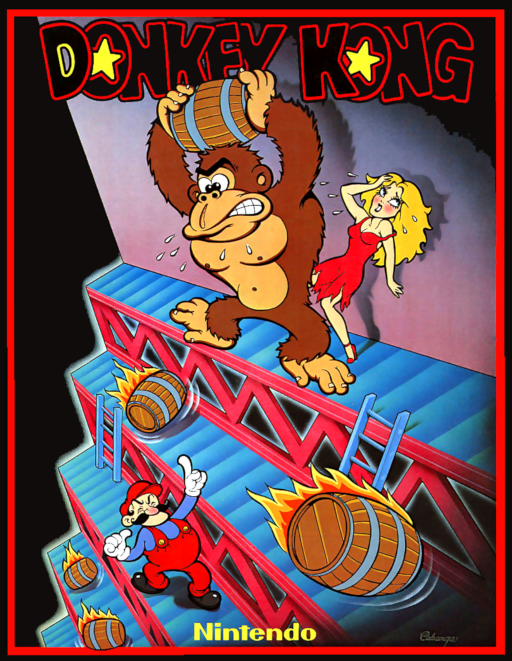
Gameplay Screenshots
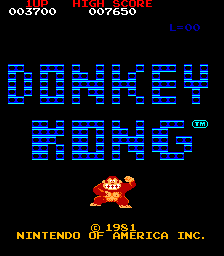
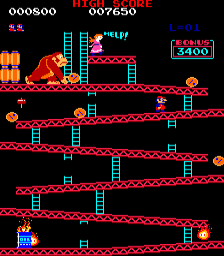
About This Game
Donkey Kong is the arcade game that rescued Nintendo's American business and, along the way, invented the platformer. It is also the first game Shigeru Miyamoto designed, and the first appearance of a character who would eventually be renamed Mario.
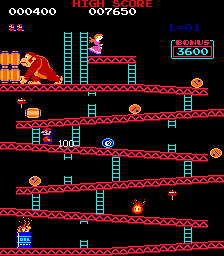
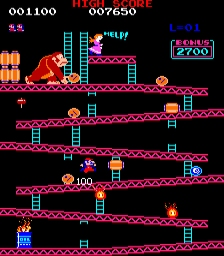
The structure is four screens, and each one changes the rules. In 25m you climb girders while barrels roll down; in 50m you walk conveyor belts that reverse and threaten to drag you into the press; 75m is a vertical climb through bouncing springs; and 100m is a rivet puzzle where you pull eight pins to make the ape fall. There is no jump physics to speak of - Mario's leap is committed and short - so the game is about route planning against barrels that follow you down ladders. Nintendo originally shipped it with a deliberately unlicensed-looking cabinet, and the plan worked: it pulled the company out of debt and became one of the highest-grossing arcade machines ever built. Note the slug: this is the 1981 arcade original, distinct from the Famicom conversion.
- Four screens with completely different mechanics
- Barrels that choose ladders based on where you are standing
- The debut of the character later renamed Mario
- The hammer - a temporary weapon that also drains your time
Version History
- Arcade original1981-07
Nintendo's original release, the version on this page.
- Famicom / NES1983 / 1986
The home conversion, a separate game with only the first three screens.
- Donkey Kong Junior1982
The sequel in which you play the son, released the following year.
Tips & Strategy
Do not camp at the top of a ladder
An AI barrel will always pick the ladder you are climbing. Standing still above one is what teaches you the hard way.
Jump barrels going down, walk when going up
Jumping uphill costs more than it saves. Using the jump only on descents keeps your timing readable.
Take the hammer only when it clears a path
The hammer stops you moving and burns the timer. Grabbing it should be a route decision, not a reflex.
Learn the 100m rivet order
Pulling the pins in a fixed order keeps the fireballs predictable. Improvising on that screen is what costs the last life.
Download Resources
Resource packs for this game are provided through the button below.
⬇ Coming soonSimilar Games
Browse all: Arcade Games